
Second Nature
Musings on automating our choices and engineering the molecules

Before fitness became a scheduled calendar item and the gym a destination, life made fitness a functional outcome of daily rhythm.
I have vivid memories of flour being ground in the chakka, spices being pounded on stone, idli and dosa batter ground by hand, and cloths pounded on a stone platform. As children, we would compete to draw water from the well.
Little did we know that our biceps, core, quads, and glutes were all getting worked. We did not know muscle groups or have names for them. There were no running coaches, strength and conditioning classes, isometric exercises, or private trainers. Physical upkeep was quietly built into everyday life.
I vividly remember when we got our first mixie or electric grinder. It was a wonder, chutneys whipped in a jiffy, all the batters and masalas. The washing machine was another cherished household purchase.
We gladly outsourced drudgery to machines.
And once the body stopped working through daily life, fitness became a separate activity. It needed a calendar slot, a coach, a gym membership, and sometimes, even a competition to prove our commitment. A recent HYROX event in Bengaluru reportedly drew 8200 participants. Imagine explaining that to our grandparents: thousands of people paying to run, lift, and sweat in a hall, paying good money to do so! :)
I can’t help but wonder if the same thing is about to happen to our brains.

As AI begins to make everyday decisions for us, perhaps we will need brain coaches the way we need fitness coaches today. People who help us work our memory, attention, judgment, improve cognitive skills and emotional regulation, much like we now work our core, shoulders and lats.
Imagine a home robot that notices we are restless, plays our favourite music, adds melatonin to our water, and gently coaxes us to sleep. But the brand of melatonin it ordered was influenced by an ad a pharmacy paid to place. We may have a chef bot with access to our medical reports. It sees a calcium deficiency, orders broccoli and sesame seeds, and refuses to allow aloo fry on the menu for a month.
With our mothers, we protested about cabbage, negotiated, sulked, resisted. With a machine, perhaps we may simply comply. We may win arguments against humans and lose to optimisation.
Convenience rarely feels like surrender in the moment. It’s mostly relief.
Until one day. Until one day, when we crave friction (and some carbs too).
Pulse of Progress
Tales of Tech, Innovation and more
Enzymes are invisible engineers.
They break, build, speed up and support repair processes inside us - helping digest food, power healing, catalyse chemical reactions and keep the body from becoming a badly managed chemistry lab.
But many natural enzymes come with limitations. They can be delicate, expensive, temperature-sensitive and difficult to use outside narrow biological conditions.
So scientists asked an interesting question: what if we could build artificial versions of these tiny workers?
That is the idea behind nanozymes. They are nanomaterials that behave like enzymes. They are not alive, but they can imitate enzyme-like activity with greater stability, lower cost and broader functionality.
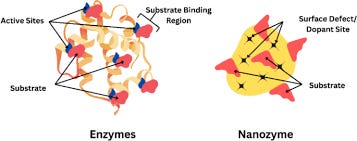
The field gained momentum after researchers reported that iron oxide nanoparticles could show enzyme-like activity, opening the door to a new class of artificial enzymes.
The World Economic Forum listed nanozymes among its Top 10 Emerging Technologies of 2025, pointing to their potential in medicine, environmental cleanup and food safety.
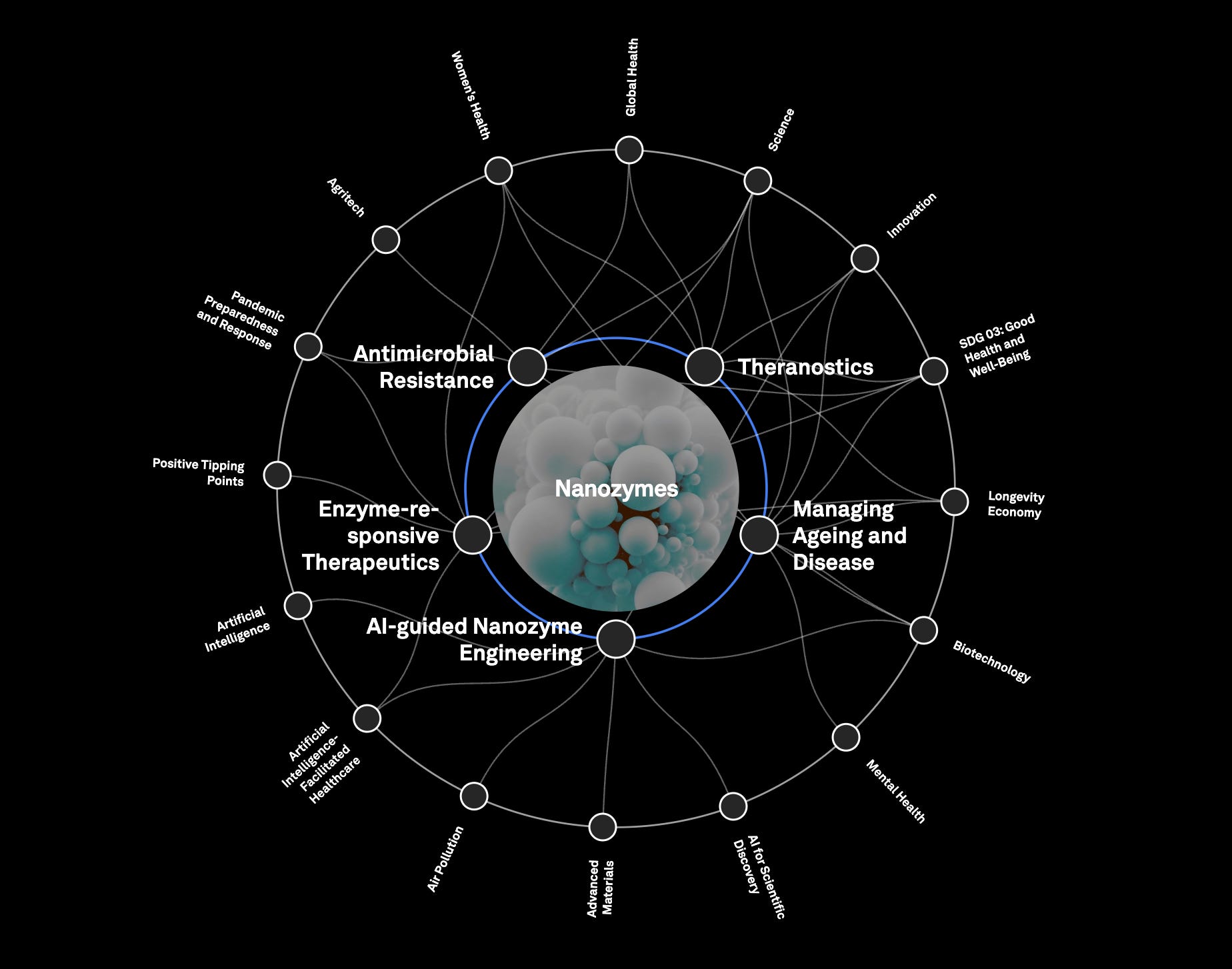
The healthcare possibilities are especially fascinating. Researchers are exploring nanozymes for diagnostics, biosensing, antibacterial treatments and more precise therapies. In simple terms, they could help us detect disease earlier, target treatment better, or support the body when natural systems fall short.
Closer home, scientists at the Indian Institute of Science have developed an artificial metal-based nanozyme that could potentially help control abnormal blood clotting caused by conditions like pulmonary thromboembolism. The research is still early, but the nanozyme works by controlling reactive oxygen species, which can otherwise over-activate platelets and lead to excess clot formation.
Beyond healthcare, nanozymes are also being explored for food safety testing, pesticide detection, environmental monitoring and cleaner industrial processes.
The most interesting tech innovation begins by studying/mimicking what nature is well-versed at. Isn’t it?
#LifeLines

#LighterNotes

May the force be with you,
Vani