
Above and Beyond
Notes on engineered skies and the emerging ability to write biological code

The sky is closer than we think.
We look up above the world so high and spot diamonds, clouds, birds, stars, monsoon signs, childhood daydreams in the sky. It feels endless, distant, and almost spiritual.
But slowly, with aviation, satellites and space systems, that vast blue has become a more crowded, useful and strategic arena.
A commercial aircraft usually cruises at around 35,000 feet, about 10 to 11 kilometres above Earth. From the window seat, that already feels like the edge of the world. But the Kármán line, widely treated as the beginning of space, sits much higher at 100 kilometres.
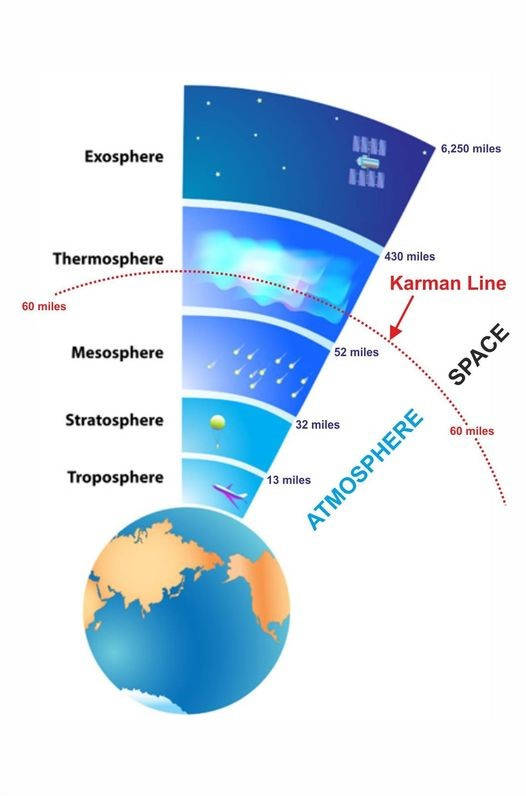
That comparison matters because the sky is layered. There is the sky we fly through, the upper atmosphere and near-space we are learning to use, and above that, the orbital layer we increasingly depend on.
This is where the story becomes interesting.
The space above Earth is becoming infrastructure.
Low Earth Orbit (LEO) and Very Low Earth Orbit (VLEO) are becoming valuable for Earth observation, weather and climate monitoring, low-latency communication, surveillance and defence. Satellites closer to Earth can often observe more sharply and communicate faster, though they also face more drag, shorter orbital life and tougher engineering constraints.
In other words, what happens above us increasingly shapes what happens around us.
The forecast before a cyclone, the ability to monitor crops, track ships, study forests, respond to disasters, connect remote regions and strengthen national security, all depend on systems most of us will never see. Even the maps on our phones remind us how deeply daily life now relies on invisible satellite infrastructure, though today’s GPS systems sit much higher than LEO.
Defence is also moving into this layered sky. Space-enabled systems can help detect and track long-range missiles and hypersonic threats, then feed near-real-time information to systems on the ground. Future concepts may push response systems even higher into the atmosphere or beyond.
Our endless, empty sky is an engineered territory. We are organising it, measuring it, building through it and depending on it.
Pulse of Progress
Tales of Tech, Innovation and more
What if life came with an edit button?
It is a thrilling thought. But perhaps, also the wrong metaphor. Biology is not a Google document. We don’t have the luxury of an undo button or a neat version history.
So can we really understand life well enough to design with it?
DNA is often called the source code of life. For most of history, biology was something we inherited, observed, healed, or slowly influenced. Then sequencing helped us read DNA. CRISPR helped us edit DNA. Now, scientists are trying to write DNA at greater length, accuracy, and scale.
In some ways, we are moving from reading the book of life to learning how to compose new pages. That is the holy grail: building a reliable design-build-test loop for biology.
Think about designing a genetic sequence on a computer, building it in a lab, testing how it behaves in a cell, learning from the result, and improving it again.
AI is already helping with the design side of this journey. Advanced models can suggest genetic sequences and proteins for applications ranging from personalised cancer vaccines and therapies to sustainable materials.
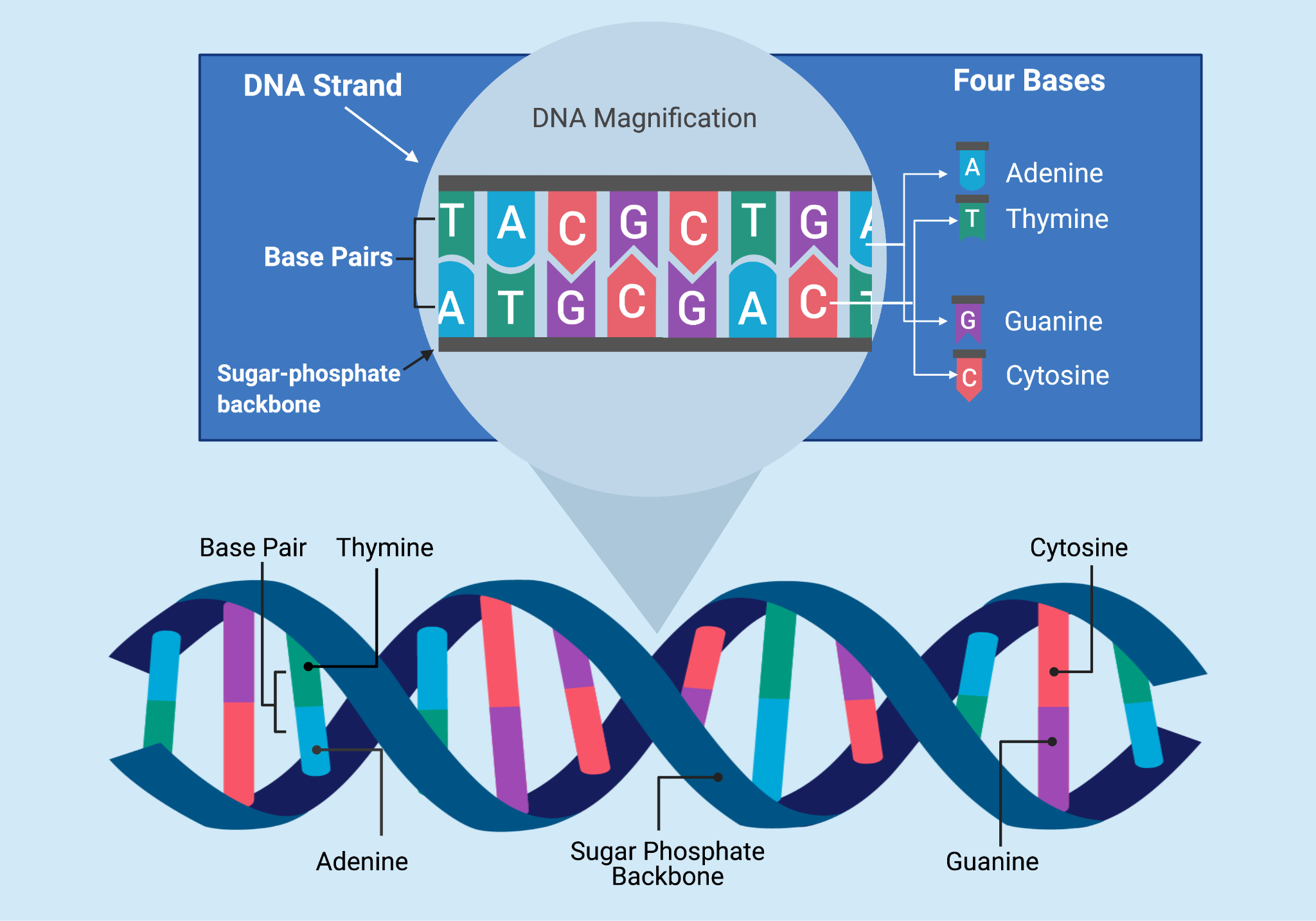
But designing biological code and physically building it are two very different things. It is like having the blueprint for a futuristic skyscraper but no machinery precise enough to construct it.
Today, chemical DNA synthesis works best for short fragments. Genes and genomes are much longer and must be assembled from many small pieces. The order matters. One misplaced piece can change the outcome entirely.
The recent advancements are promising.
In 2026, Caltech researchers introduced Sidewinder, a method that gives DNA fragments temporary molecular “page numbers” so they can be assembled in the correct order. Harvard researchers, meanwhile, used a silicon chip to produce 64 distinct short DNA sequences simultaneously, using electrical currents to control chemical reactions at individual sites.
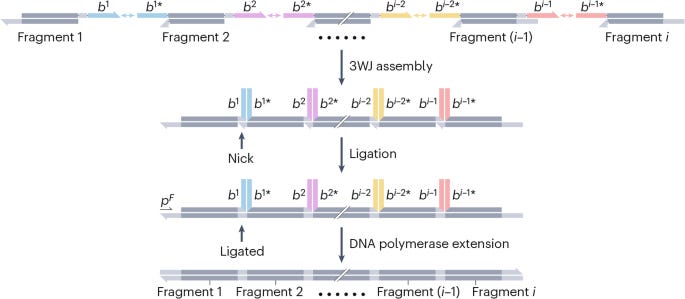
One system improves assembly. The other improves parallel production. Together, they point to the next major milestone by reading, editing and manufacturing it more predictably.
The impact could be enormous. New medicines could be designed faster. Personalised therapies could become more precise. Proteins could be engineered for specific functions. Microorganisms could be programmed to produce useful compounds. Sustainable materials could be grown instead of manufactured through energy-heavy processes. DNA itself could even become a medium for data storage, though that remains a much longer-term possibility.
It sounds like science fiction, until it doesn’t.
But biology is not software. Living systems adapt, evolve and behave in ways we may not fully predict. The success of this frontier will depend on whether we can programme biology responsibly, with humility, imagination, and restraint.
#LifeLines

#LighterNotes:
May the force be with you,
Vani